Showing posts with label Malayalam. Show all posts

Wednesday, November 20, 2013

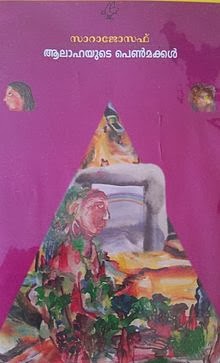
ആലാഹയുടെ പെണ്‍മക്കൾ - Sara Joseph

Urbanisation needs people to who work the dirty things behind the 'every thing is good clean and shining' life of the city dwellers. These people, who work non-stop in the background, live in the  hidden quarters, work at odd hours, are the necessity of any growing city . Forced to live outside the city limits, their land and their life is encroached and driven away by the ever expanding need of the  city, forced to shift themselves away, as the city grow. Sara Joseph in her short novel write about these marginalised people, whose culture, language, voice, thoughts and life are encroached by the pretentious mass of urbanised, mainstream population.

Invasion through out the history had those who control and those who suffer. The economics, religion, and physical and organised power always played a key role in colonisation and control. The invading power , however, need the service of these sidelined populace for their daily affair. The exterior brilliance of the society needed the dirt and filth to be cleared.  Thus, every city, every social setting has people who are termed and identified to be the 'cleaners' for long time. These people, scavengers, the washerwomen, the cart pullers, the maids , gardners, security agents  are 'housed' just outside the social strata. They have to be available at a calls length, but not within their 'identifiable community'. Sara Joseph, reflects our conscience to these people and their life in the mid 20th century Thrissur.

Kookanchira, in the outskirts of Trissur, was once the dumping ground of abandoned bodies and carcasses, before the group of people, scavengers and other low life settled in. Annie, now eight years, is born in this place among the other low class, after her family moved into this place. Her father had abandoned the family, leaving her and her mother among many aunts , the aging grand mother and a crippled uncle suffering from TB, bed ridden, spitting blood. His whereabouts are not known and the family is resigned to the fact that he is not to be expected. Kookanchira is infamous for its past glory, its criminals ( the gang of 14 rowdies), the other people of ill-repute. Even at school, a place for progressive thoughts and teaching, students from Kookanchira is looked upon with disgust and contempt. Annie, through her childish eyes, witnesses the slow but definite changes that takes place in her outskirts. The place, where many houses stood, was being taken by the rich from the city, producing documents from authorities to show ownership of the property. The fights and the resistance, can easily be soaked wet by alcohol, by brute force, by the might of authority or the ruling class. Hence, the place, which was once a grave yard, a place of wandering ghosts, of numerous legends is now become history. So is the history of kookanchira, a history of the place is the history of its people.

One of the attributes of colonisation, or invasion, of encroachment is the structural destruction of what existed. The culture, the way of living and the language in particular. It was so from the early days of invasion. The Spaniards and Portuguese in the South America, the English all over the world. It is the same within the country by the rich over the poor. Brahminism, dictated the standards, the structure and the style of language (sanskritisation) and the way of living and thinking. What is followed by the upper class people become the norms of the society. However, those sidelined and marginalised community, find their own identity through their language, their rituals and customs and even physical appearance.

Sara Joseph uses the language to an outstanding effort. The identity of the people is in their language. Language is the character here.  The legends, the folklore, the politics, the daily life of the inhabitants unveiled through the natural progression of language. The language of the elite, is viable only for Annie's uncle, who is always bed-ridden. Annie, complains that she cant understand her uncle when he speaks in this language. This uniqueness in the narrative is that it often hard to understand ( even those who speak Malayalam) and makes it all the more difficult for translation. This is a hold no bar way of communicating. The idioms, the ample use of foul and unparliamentary language, the care a damn attitude for grammatical correctness the referential contexts and the other 'characteristics' of their spoken words make this an enriching reading experience.

While the focus is shifted to the narrative, one should not take the attention away from the story telling. Sara Joseph, cleverly weave the story, of the families shifting fortune, and through them the society that they belong  and the larger population and the changing social and political scene of Kerala. A family of 7 women ( mother, grand mother and five aunts), a young girl and an invalid bed ridden male of past fury  of rebelliousness, under one roof. Apart from the sporadic interjections, the voices are all of the women. Its the women who moves the daily score, with men busying themselves with alcohol or quarrel. Their might and demonstration of power are restricted to the public arena, but the control in the real sense ( despite a few beating they suffer after an alcohol induced reaction) is with the women folks. For Annie, her uncle is some one who is beyond her world. She know he taks about profound things, but have no connection with the world they live in. Its through her grand mother ( and her stories) she know the worldly wisdom. The men of her town, the women, the religion ( her grand mother is switched to Syrian sect while her mother remained Roman Catholic) , the authorities, the money lenders, whores, the neighbours and the ancestors are opened to her world through these womanly conversations and experiences.

Sara Joseph, uses these varied facets of story telling to some great effect. The language, the sociao political structure, the worlds of women, the perils of the new capitalists system, the issues of growing urbanisation, the prevailing caste struggles, the rich and political nexus combining their might against the unorganised, low class into a memorable little book with her insightful narrative. Brilliant in both style and technique, very refreshing reading experience.

------------------------------------------
ആലാഹയുടെ പെണ്‍മക്കൾ ( 1999)

Sara Joseph

D C Books

152 Pages
-------------------------------------------
Samyukta , Wiki

Monday, October 14, 2013

സ്വധർമ്മം അഥവാ സമ്യക് ജീവിതം - S.Rajendu

It was about 15 years back, when I read an article about 'Shivapuri Baba' in either 'Samakalika Malayalam' or 'Mathruboohmi  ( my memory fails me). Later after my marriage, I was given to understand that 'Sivapuri Baba', is one of our ancestor on my father-in-law's side. Under the new revelation, I did read that article again and the only thing that caught my attention was the mention of his age. It was given that he died ( or ceased his bodily existence) at an age of 136.  His name came up multiple times in discussions and each was only to add to the amaze one had on some one who lived in the Himalayas and lived till the age of 136.  Sri Matampu Kunjukuttan, in one of the evening discussions, did mention the book written by an Englishman, John Bennet, on the life and messages of this saint titled "Long Pilgrimage". I haven't been able to get a copy and read the book, but was following various short writings that appeared in various magazines and news papers. The interest rekindled again, after another relative of mine had been to Kathmandu and visited the 'ashram' of the spiritual guru.

Sivapuri Baba, born as Jayanthan Namboodiri, in a well to do Namboodiri family near Kunnamkulam, Trissur district. Afrer initial days of wandering, he achieved the 'enlightment' at the shores of Narmada, later he too 'sanyas' from Sringeri Mutt  and named himself as 'Govindananda Bharati' as was the custom. It is since then he started his journey, covering 6 continents, largely walking ( except to cross the seas). He seems to have met with the Queeen Victoria at least 18 times and was one of her spiritual advisor. Other dignitaries of his connection include the then US President Theodore Roosevelt, Wilhem Kaiser II of Germany, writer George Bernard Shaw,  and legendary Leo Tolstoy on whose farm Baba spent nearly two months. Inspired by the guru, Tolstoy had written a short story "The Three Questions", the translation of the same is given at the end of this book ( the story can be read here). In the year 1930, he settled in the hills of Nepal, near Kathmandu at the age of 103, lived there until his death at the age of 136.

Rajendu, had not written a biographical or spiritual study of the sage, as most of them are already available with us. The book is a collection of question and answers. Numerous questions on the way of life, the truth and so on, and Baba's answers to them is collated, summarising the messages of the saint through his answers. The rest of the book, alternating with each chapters of 'questions and answers" are the memoirs of various people who acquainted the Guru and had been his disciples since then. This include the Sri Lankan Tarzie Vittachi , Y B Shreshtha's discussion with the merchant Manadasa Kuladhara, who is considered to be the first of his disciples in Nepal, an Australian doctor (Miens?) and Huripman  an American traveller. The experience of each of them are no different from the rest of the people who visit him.

Baba's messages are no different from the other sages. As expected, they are about the way of life, living in the paths of Moksha, finding the way to the lord however long it takes. You will realise once you have found your way and that will take you to the paths of Gods. He says, for a spiritual way of living, one need a body that can withstand the demands of the life, hence it is important to care for the body, the encapsulation of the inner. The oneness  with the Almighty is possible only if you constantly seek the ways of God.  He add, one need a Guru to direct him towards the path. Only a few masters ( Ramakrishna Paramahamsa or Ramana Maharishi to name a few) managed to attain the 'sakshatkaram' without the help of a Guru. For common man, it is essential to have a guru to guide him and correct him in his quest of attaining spiritual sojourn. It is also said, that one a person is ready to receive, the Guru will find him.

This might be the first of its kind book on Shivapuri Baba, where the importance is given to his messages. There is no analytical view or deconstruction of his life and messages. The book is fairly simple and an easy read, though the essence of his message keep repeating pages after pages. One realise that the essence remain same, who ever the sage is and whatever is the form he prefer to deliver. The book has a brilliant preface by Rajendu, which in reality is the only piece of his writing in this book.
------------------------------------------
സ്വധർമ്മം അഥവാ സമ്യക് ജീവിതം (2011 )

S Rajendu

184 Pages
-------------------------------------------
 Times Of India, The Hindu, Shivapuri Baba I, Shivapuri Baba II

Saturday, August 24, 2013

വാസുദേവ കിണി - മാടമ്പ് കുഞ്ഞുകുട്ടൻ


An year and half back, if I remember right, when I met Sri Matampu Kunjukuttan at his place, among various things he spoke, a hint about a new novel came out. Story of an old Konkani Brahmin, put in the jail for over 70 years, was shot at, on the day of his release. An old vengeance, an old settlement of score, by a member of the Portuguese (converted )  family, was behind this. He said, the story has to begin from here and he hasn't thought beyond this. During the evening, a small 200 page notebook, was opened in fron of me, and in his impeccable, clear and classically styled  hand writing, the letters and words came out of these pages . "വാസുദേവ കിണി" with an underline, and the first chapter of the proposed novel , sprang up .  Thus, I can probably boast, of having witnessed the creation of this new novel, before anyone else had seen. On every visit, I made a point to enquire about the progress, and I came to know that the same is then given to a magazine, "Kesari", for publishing it , a chapter a month. Publication in a book for was imminent and it is now available for a larger audience ( I am not sure what is the circulation of Kesari and how many of its readers has taken notice of this novel).

From the initial dramatic set up, begins the new novel. 90 year old Vasudeva Kini, released from the jail after 70 years , 10 months and 1 day, was shot at exactly 30 mins of his freedom. Francis Dsouza, descendent of the family who served the Portuguese army on their days of power, had delivered the task entrusted in him by the generations. His father, waited for 50 years at the gate, and Francis took over the charge after his death. The task is clear, you have to shoot the man in 30 mins of his coming out in the open; one shot, not one less or more. The fate had another outcome in mind. The bullet, probably due to the weariness of the shooter, and lack of concentration there of., did not cause the intended damage. It managed only to caress the newly liberated man before giving up its plight. The curiousness of the reader is now ignited, as one expect the writer to get into the flashback of the DSouza - Kini affair and the rivalry resulting in the 70 year jail and the shoot out. However, the canvas which Matampu, is exploring is beyond the family feud , but the cruel and ethnic conflict suffered by the earlier generations at the arrival of the colonialism in the country. 

For many centuries, the shores of Kerala was known for its trade, mostly the spices, largely controlled by the Arabs, en route Istanbul and to Europe and by China in the east. Barring a few skirmish, these trades by and large had been peaceful and was within the spirit of trade ( give and take). The scenario changed with the arrival of Europeans, and as is their greed, they wanted to take control of the trade barring the rest, and going a step further, wanting to control the area and its resources. Now,  the tradesmen become owners and rulers of the land.  The first mission of the Portuguese ( Vasco Da Gama)  was with the intention of trade, but the next one led by Kabral, paved the seed of colonisation in the land of spice. Keki N Daruwalla's novel 'For Pepper and Christ" is an interesting account of these early days of Portuguese. The Portuguese control did not last long, as they were defeated by Zamorin and by Dutch  and were forced to leave Kerala, settling up north in Goa ( Gomantak, the original name, as Matampu refer in his book). A rule lasted more than 400 years, until 1961 when Indian Army marched into Goa to liberate it from Portuguese. The early days of their rule was marred with large scale conversion of the people into their belief ( the Bible, the Coin, the Gun: Holy trinity - Petal of Blood ,  Ngũgĩ wa Thiong'o ). Forcing the people to eat cow-meat, a taboo for the cow-worshipping Indians, holding them by force and using all the means to stuff the meat inside their mouth. Once you are eaten the meat, you are outcasted from the society, by the rigid Indian Social norms. Having no other option, most of them had then converted themselves and followed the belief system of their masters. A few who resisted, escaped from Goa, and moved south towards Kerala and settled in and around the area of current Cochin and Trissur districts. A large settlement of konkani Brahmins, in Kerala, had a history of fleeing from  Goa.  on a similar case study, there is a sizable amount of Tulu Brahmins ( Embranthiri), from the South Canara District , ran away from their home land to escape forced conversion by the Mysore Sultan's Hyder Ali, and Tipu Sultan. The Tamil Brahmins, from Tanjavur area apparently came into Kerala , during the invasion of Malik Kafur. Interestingly, all the conversions are largely directed at the higher strata of the Social life, mostly the Brahmins. The lower caste, were usually left alone for they have no financial or social power.

Matampu's hero, represent this group of migrated Konkani Brahmins who settled in Karuvannur, a village in Trissur District near Arattupuzha temple. Apart from the attempted murderer Kini, had another person waiting for his release. 71 year old Sheetaladevi, widowed on the day of her wedding ( the last day of the wedding ceremony). Widowed but virgin, Sheetaladevi had a divine dream , in which she was to join Vasudeva Kini in the remaining of her life. Taking him along to her small house, she took the responsibility of rejuvenating the old man. 71 year of silence, made the old man to loose his words, but his thoughts are reconstructed from the grumble of his stomach by Sheetaladevi. The rest of his life, is to establish a kingdom which  is free from the clutches of all religion. Karuvannur, the middle of Kerala, the river, at the centre of the 44 rivers that divide the land of Kerala, has become the  symbolic center of transition : the old to the new, the history and reality, the cruelty and the compassion, the confinement and freedom, the thought and action. A new beginning has to happen at the middle and spread like a wave in the pond.

Vasudeva kini is the liberator. He has emerged from the dungeons of darkness ( self inflicted) to show the light to the world. A new world order has to begin from the ashes of the history.  The wise man has no words as the 71 year old silence is muted his voice. Its left to your intellect to listen to him, and understand him. The meaningless vengeance has to end with the firing of the gun. Neither the hunter nor the hunted knows the reasons behind the rivalry, and its the same with the readers, as the novelist does not indulge in the reasons of the rivalry. It is senseless, and what is needed is a world beyond the historical learning. The perpetrator is now dead at the feet of his victim after seeking pardon for the undoing of the generations of his ancestors. The new world, the new Karuvannur, is free from all those black pages of history. Its a new beginning.

Largely told through various flashbacks, Matampu develop his theme of colonisation and conversion, with historical perspective and social importance. A subject, which not many historians ( leave alone writers) attempted to put their hands on.  Matampu's gifted ability with the language, those 'old school' way of forming polished sentences, is the strength of the book. The structure is not flawless, the plot per se is not strong, but the context with which it has to be read is important.  His reading of these hidden pages of history might be subjective. It is his interpretation of those pages and as a fiction writer, he uses his freedom and flexibility, to the best of its effect. This might be controversial if one decides to look through the narrow angle, but this is worth the effort.

--------------------------------------
വാസുദേവ കിണി ( 2013 )

മാടമ്പ് കുഞ്ഞുകുട്ടൻ

Green Books

216 Pages
-----------------------------------------
പുസ്തക വിചാരം

Sunday, June 09, 2013

പ്രണയത്തിന്റെ മൂന്നാംകണ്ണ് - K V Mohankumar

Dropping off his education, in search of 'nirvana', the ultimate truth , Rahulan starts his journey away from his dear and near. He need to find a Guru, who could guide him to the path of 'nirvana'. At home, in Muchiri, the preparation of his return, as 'graduate' is in full swing. His father was working for the biggest trader of the port. Upon his death, Rahulan and his mother was living under the protection and support by the Trader. Jabala, the daughter of the trader is pursuing her love for Rahulan and their wedding is on the cards, awaiting the triumphant return of the boy after his studies. He is expected to lead the team and the ship on its scheduled journey and Jabala, preparing to join him on his right side. However, the wait is of no positive consequences. Rahulan had different plans. He is now a wanderlust, in search of the path to 'Buddhahood', seeking direction in his path to nirvana and looking for someone who will lead him there. His journey ends at a 'black-smith' girl, who takes him through the spiritual journey of 'ultimate love and desire' interpreting this as the union of souls and bodies in the supreme coherence of power, through which you approach the divinity and 'nirvana'. In completion of her prescribed task of guiding him through this phase, she return to her folds, saying all that is to be learned in the 'paths of 'tantra' is now been imparted to him and hehas to fend for himself. Rahulan continues his travel through the world for the final salvation and the one-ness with the universe. In this phase of his life, he continue to meet people whom he was encounters in his pre-yogic days, including his mother ( who dies in his hand, savouring the last drops of water poured by him) and finally Jabala herself, Captaining the ship on his absence.

The book is inspired by 'tantric Buddhism', and an attempt to merge the mystical and spiritual world of Buddha to the world of  'Osho'. At one side, the quest for 'nirvana' and on the other the 'liberation of self through fulfilling the desire of the physical body through the five sensory organs'. The premise and the context of the book is interesting.

I would like to look at the book ( and his writing) in two parts. The Two parallel tracks he was trying to carry through the book, with a possible and predictable convergence. The parts of Muchiri, with ever waiting 'soul mate', his mother and the port and trade community in general was beautifully written. On the other part, the one with Rahulan's quest for 'nirvana' and the resulting spiritual 'endeavor' in general wasn't as free flowing. At many places it felt forced and superficial. The inner turmoil, the constant doubt on himself and the path he has chosen, the uncertainty regarding the 'Guru' and 'karma' ( in the real sense of work) oriented learning of the 'truth' instead of 'dhyana' oriented approach etc are written and accounted very well. How ever, the tight narrative, to me looses its sheen, when it comes to the 'sensory love', the one-ness of body and soul, the spiritual emancipation of the desires, living the physical and sensual life to the extreme under the guise of mystical reunion of  the plough and the land ( a metaphor appear through out the book ): while it looked good as a theme, it wasn't very appealing in the end.

K V Mohankumar , IAS Officer and presently the District Collector of Kozhikode. He is not new to literature, having published many books already. I haven't read any of his previous books. From what I seen in this book is that he is good at his work. Though the theme he choose to explore is a bit vague and in the end did not deliver to the promise it created at the beginning, the parts of Muchiri and parallel track were beautifully written.

-----------------------------------------------
പ്രണയത്തിന്റെ മൂന്നാംകണ്ണ്  ( 2012 )

K V Mohan Kumar

D C Books

184 Pages
----------------------------------------------
The Hindu, Penmai

Thursday, May 23, 2013

ഉണ്ണികൃഷ്ണക്കുറുപ്പ് : വിടപറഞ്ഞ ദിവ്യഗായകൻ - C M Narayanan

One of the advantages I had of growing up is that we never escape some conversation on Kathakali almost every day, a padam hummed by elders, a reference to some story, some anecdote or some visit . Despite your ability to grasp and understand the nuances, you were pulled along to those cold , shivery nights ( Jan /Feb ) for a full night Kathakali. There were preferences in the choices of elders. Most of them were drawn to the established names of traditional "Kalluvazhi" style and its propagators like Ramankurtty Nair, Padmanabhan Nair, KR Kumaran Nair ( note the use of KR against more popular Keezhpadam) Vellinezhi Nanu Nair etc. When it comes to singing I found the majority preferred Neelakandan Nambisan and Unnikrishna Kurup ( the combo had guaranteed audience).  It was during those half asleep nights, I've used to listen to the some what flat, very distinct , often difficult to differentiate the words from the music singing of Kurup.  As young boys, we were awake and see the first 'katha' mostly of the Nalacharitam , Santhanagopalam and Kuchelavruttam types and when it comes to the meaty second ( heavy weight kathi), our eyes defy the elders and our own wish and find itself shut from the rest of the world. However, the return journey typically have the in-depth critical analysis and it is through these discussions, we formed some of the limited understanding that we gained over the period of time.

I have, always found an admiring remarks about the music especially of Unnikrishna Kurup. It can be safely said that the Kathakali Padam came into prominence during the era of Neelakandan Nambisan and his disciples most notable among them being Unnikrishna Kurup. Though I had the luck of attending many Kathakali events where Sri Kurup was performing, it is only now, after many many years, that I'm able to appreciate the music.  He was different. A rebel by all means. A versatile singer who sings to the stage. Who gets to the depth of the character and the actor on stage and sings to the occasion. Often moving the listeners and the artist in its mesmerizing beauty. Marimankanni from Nalacharitam 3rd Day, is the benchmark of dwijavanti. No other rendition be it akhilandeswari or Chetasri Balakrishnam or any other had the same impact as 'mariman kanni'. The reference to me is the version from Unnikrishna Kurup.

All these are to talk about the recent read I had on the life and Music of this gifted singer. While most of the leading exponents of Kathakali had their own memoirs ( mostly the actors), there was no such on the other artists of the great art form. It was left to the fans and well wishers to organise the remembrance. Unfortunately, Unnikrishna Kurup, did not have any of these. A prodigy, left us 25 year ago, at a relatively young age of 57, had no written pages on his name. C M Narayanan, a second generation desciple of Unnikrishna Kurup, came out with a book, a collection of various writings, on his grand-guru, in 2006 , 18 years after the death of the singer.

The book dwells very less into the details of his biography. It does touch upon his family, his early days, his days at Kalamandalam ( he had no formal training in Kathakali Music, after running away from Kalamandalam) , his days in Darpana Ahmedabad, the teaching days at Shanti Niketan were mentioned. However C M Narayanan himself spent his effort on looking at his music especially that of Nalacharitam in detail. In a very scholarly fashion, he explain the nuances and specialities of the singing style of Kurup, his improvisations, some memorable performances. The second part is largely a collation of various writings about Unnikrishna Kurup by critics, by Palanad Divakaran ( his prime disciple and torch bearer of Kurup-style) and reproduction of relevant pages and paragraphs from articles and books published.

While this is not a comprehensive book on the life and times of the master singer, it did bring out , for the first time, a collection of writings on Kurup and for the fans of his music, it provided a place to reminiscent the golden days of Kathakali padam.

----------------------------------------------------------------------
ഉണ്ണികൃഷ്ണക്കുറുപ്പ് : വിടപറഞ്ഞ ദിവ്യഗായകൻ  ( 2006)

C M Narayanan

VAZHEMKADA KUNCHUNAIR MEMORIAL TRUST

158 Pages
-----------------------------------------------------------------------

Friday, April 19, 2013

ചോരശാസ്‌ത്രം - V J James

The title was confusing. I took it for 'the science of blood' instead of 'The science of Theft'. V J James' claim to fame was the winning the award, during the D C Book's silver Jubilee novel competition. I have no previous reading experience of James.  The book and its overall approach was impressive ( reading the blurb) and hence decided to buy this and read. To his credit, this was a good attempt. However a theme like this is too thin for a long novel. The thief ( unnamed and called the thief through out) learned the trick of opening locks without the use of any device, but with the look ( concentrated gaze perhaps). A trick taught to him by an old retired professor, who chanced upon an old manuscripts on "theftology" or the art and science of theft. The professor wanted a disciple with whom he can experiment the learning of scripture and our hero fallen for the clever trap set up by the prof. To cut the tale short, he learned the trick and grew in stature as a thief and as a result in wealth.

On successful completion of the training, the professor presented him with a 14th century coin of the king, who from then on was a silent witness and companion to his crime. So much can  be said that the 'king' is the lucky charm of the thief. It did not take long for him to get his own disciple. A silent boy, who treat him as God, and leanred smaller tricks and provided ample assistance to the thief during his exploits. However, the thief was clever enough , not to teach the technique of opening of the locks to the apprentice. The rest is predictable,as the initial excitement paved way to greed  and the accumulated wealth needed protection. When you had nothing with you, the entire town's wealth was yours, but now that you own something of your own, you need to protect them. Suspicion and distrust became the way which in the end resulted in his downfall.

Apart from a clever idea, it is not supported by any greater story or a build up. Few interesting characters and swift story telling apart, this does not have much to talk about. Having said that, there are moments of brilliance in his writing.  Short and quick read, probably has limited scope for a good short story.
--------------------------------------------------------
ചോരശാസ്‌ത്രം (2002)

V J James

D C Books

108 Pages
------------------------------------------------------

Saturday, February 09, 2013

ഭാരതപ്രദര്‍ശന ശാല - സി . അഷ്റഫ്

Kuttayi Moopan's introduction to the Independent Movement and Congress is accidental. It was during the agitation across the country,  the famous 'Dandi March' of Gandhiji, when Indian National Congress members across the country marched to the nearest sea shore in order to 'make salt from the sea water as a part of disobedient movement. A significant moment of Indian Independent struggle, has its own versions across the various part of the country. Koman Nair, the leader of the Congress in Ponnani, along with the large number of workers and supporters of Congress, dried , precipitated the River water and in order to produce the lime from the water. At the crucial moment, they realised there is no one had a match box to light the fire ( being good samaritans, Congress workers do not have the habit of smoking). It was Kuttayi Moopan, young boy in his teens, who came to witness the historical moment, had to step in and provide the necessary fire power to a successful campaign. A relation started in 1931, continued despite the changes that swept the country as well as the Indian National Congress. Under guidance and support from Koman Nair and other leaders Kuttayi became attached to the movement. The independence wasnt as exciting as it was expected. The issues related partition , the death of Gandhiji and the general chaos that prevailed after that disappointed many of the freedom fighters. Koman Nair, retired into his 'newly build' ashram neat the river. 

Following the footsteps of his leader, it is Kuttayi's habit, to observe fast during the days of January, culminating on the Martyr day. A habit begun since 1949, the year after the death of Mahatma Gandhi. Single, with no dependants and no one to depend upon, Kuttayi Moopan has his routine of living during the month of January, before and after. A month of utter obedience to rituals are often joined by few friends ( who supports in whatever way they could) and the flora and fauna of the village. Birds, trees, squirrels, rats and others adjust themselves to  Kuttayi's style for that one month.

There aren't many old timers left. The generation, spend a lifetime of their to the independent is now leaving the planet dejected and angered. Koman Nair, who led the Congress in their town, Moopan's Guru and mentor, is no more. The 'ashram' ( a single room attic) he constructed at the shore of the river is now abandoned, except for the weekly visit of Kuttayi Moopan. He can not leave the place, as he is entrusted with the task of taking the last interview of the old generation, named and numbered in a notebook, before their imminent death. There aren't many, left. Kuttayi Moopan himself is not in any great health, as the age has shown its power on a body that is build and strengthened by the hard labour and a truthful life style.

The book is through the 30 days of January, as Kuttayi Moopan set about to observe another month of martyrs remembrance. It takes us through the post independent days of the rural Kerala, with all its local flavour. There are tea shop owners, retired army professionals, prostitutes, the lazy workers, the politicians, the erstwhile members of Communist party, now sidelined and inactive as they do not understand the new world politics of economics, the Congress leaders joined party after they won power, who had in their previous avatar as a feudal lord, worked for the British army, often acted against the nationalist leaders. Retired army men, who fought the war along with their mates who are now belongs to the separated Pakistan.The town has its own local replica of the leaders from Nehru, Mahatma, EMS given to their valiant members for their act of similarity to their national leaders.  Kuttayi Moopan is the last of the generation remain to document the last of the men as they prepare for their last journey, until its time for his turn.

One of the issue of this book is the language. For a theme such as this and a build  and construct which is brilliant, the use of words, forming of sentences and paragraphs often gave sour taste. Too many metaphoric sentences spoils the reading experience. Every sentence has some metaphor or other,  it read more like the College Arts Magazine. I'm not sure if it only me, but a bit more control or a little restraint would have made this novel a treat to the readers. So was with the aspect of magical realism and his writing of intimate affairs. Almost all the time, it stooped to a level of porn fiction, aesthetically poor  and repulsive.

Apart from that, every thing else in this book was very good. Brilliant theme, nice structure and progression, and though predictable, beautiful finish. Every characters that came in and went, all the sub plots and narration were brilliant and vivid.  He has the substance and vision, but he will need to work on his language and style of delivery.
-----------------------------------------------------------------------------------
ഭാരത പ്രദര്‍ശന ശാല  ( Bharata Pradarshana Shala 2010)

C Ashraf

D C Books

310 Pages
----------------------------------------------------------------------------------

Thursday, November 15, 2012

ഇടത്താവളങ്ങള്‍ - E M Hashim

'A novel with a Sufi touch' says the blurb. That prompted me to pick the book. He had also published another non-fiction book on Sufism.  The start was pretty brilliant. Following on the life of Abu, who left his home town at 14 , working and living through various parts of the country , having acquainted many faces , some closely and some at a distance. Now, returning to his homeland after many many years ( the writer does not give any hint at this), he reminisce his nomadic days at his attic.

Abu, remembers his progressive father, who for his views and thought, was an outcast in his social and religious circle, denied Abu, the typical life of a muslim boy. Being discarded from the Madrassa, from his neighborhood , forced to lead a life in isolation. His mother, spent her time in the prayer mat or blowing air to the kitchen fire, never to set foot outside. The only sister stayed back after marriage, after her husband went on work to Malaysia. Unable to handle the days of distress, Abu leaves home at the age of 14. As is the case with many of his predecessors, he found his refuge in a small town in Tamilnadu, finding a job as a helper in a sawmill. His journey to manhood and learning begins at this small town of Arumapakkam. Through various acquaintance and  encounters of people with spiritual background, mystics Abu grows in stature and learning. From Tamilnadu to Mumbai and onward to Delhi - Ajmer and other part of the country, we are witnessed to more of these meetings and friendship in Abu's life.

This is the life of almost every young Keralite, who leave the state in search of a living. goes through similar experience. Hashim , adds a flavour of Mysticism to his tale. To all, the journey continue from one place to other, at each "edathavalam' you gain a lot of friends, some  last longer and many for a short time. This continues through out your life, adding newer names and faces to the list dropping few others. Hashim , restricts his tale to 3 cities, but this can continue eternal, or until like Abu, you call it quits and return to your fold.

Hashim is a good writer, and he has some wonderful pages in the book. But that alone, does not make this a compulsive story telling. It lacks in many aspect of a good fiction. Its dependence on the aura of mystic figures appearing and disappearing lack conviction and leaves us with non-interconnected narrative. Many encounters seems forced and unnatural. The shift from one place to other lacks continuity and real reasoning. The story by itself is incomplete.
----------------------------------------
ഇടത്താവളങ്ങള്‍  ( 2012 )

E M Hashim

D C Books

119 Pages
-----------------------------------------

Sunday, September 30, 2012

അടയാളങ്ങൾ - Sethu

In the contemporary Malayalam writers, Sethu is one one the prominent names. His books stand apart in the general melee of publishing. The latest Marupiravi, was also a good attempt. Taking up his 2005 book, which supposed to have won the prestigious 'Vayalar award' in 2006, was with a lot of hope and expectation. However, this book did not live up to the expectation one had on this writer.

Priyamvada Menon is a middle aged HR executive in a respected private firm, living with her college going daughter Neethu. The mother -daughter relationship is that of a close friendship, especially after her seperation from her US residing husband Ranjith Menon. The nasty separation, seemed to have made a lasting impression on the daughter and hence her dependancy on her mother is beyond expression. However, as expected in such a relation, it has to go through the period of distrust and disown. Everything started with a trip to Goa by {Priyamvada on an HR conference, where she presented a paper on the plight of workers at a Sugar Mill in Meenakshipuram. The story of old employees, committing suicide at the age of 59 ( few months prior to their retirement) in order to secure the job to their children, was received with a lot of enthusiasm. She had a lot of fans on her ability to portray a question of ethics and those cases beyond the known HR guidebooks. One of her idea of being at the conference is not only to present her paper, but to meet her mentor Prof.Roy Choudhury. A meeting which did not go too well with her,. She recalls later ' an idol should remain an idol, it should never appear in flesh and blood, demeaning its own values.

The rift between the mother and daughter now increased with them busy with their own life and not willing to concede their position. Adding to this Priyamvada's own struggle at her office, working around a factory modernizing scheme,trying to garner the support of the warring workers were taking her time. Bringing the fiery Meenakshipuram HR lady to her folds , as an assistant at the factory and as a sister to her own life, did not yield the desired calm in her life. However, as it is expected the issues at the official front as well as the home front.

Conflicts in a mother-daughter relationship. At the outset, a standard, cinematic, cliched plot. Except for the clever incorporation of the subplots related to her work as an HR head of a private firm, and the symbolic Meenakshipuram incident, where the employees of a sugar mill commits suicide at the age of 59, in order to get the job to their direct descendant, the book is very very ordinary. The new trends in writing, with working professional women in lead, the independent living, open discussions between parents and kids etc could be a welcome change. Notwithstanding his ability in handling the subject with a good control of language, to me this is not one of those books that stands out in Malayalam literature, irrespective of the numerous awards it is supposed to have won.
-----------------------------------------------
അടയാളങ്ങൾ ( 2005)

Sethu

DC Books

276 Pages

Rs 125
--------------------------------------------------

Saturday, July 14, 2012

ലൈവ് ഗ്രീന്‍ - 30 (Live Green 30) - Ajith Janardanan

Few years ago, Jose Saramago published a book called "Death at Intervals". Building up a world of chaos at the result of death's absence, in his own inimitable style. Satirical , witty and with great restraint ( its easy to go haywire with such a theme), he produced a brilliant work to me the last significant work by the Nobel Laureate. When I read the blurb of Ajith Janardanan's new book, the reference of Saramago's book came into mind. I am not comparing a novice to the Nobel Laureate, but bringing to your attention a class work around death, or its absence there of.

Ajith Janardananan's short Novel, which won the Manorama Online Novel Carnival award ( I guess it can be read online here), looks at the duality of world, where the mortals, won over the death thus eventually achieving what the entire human civilisation was working towards for generations to generations. They discovered the magic medicine, to prevent death and aging. However, for every step towards progress(?), there have to be an opposition. There were equally strong rejection to the medicine ( called Live Green 30) and defying the will of God by the other half of populace. The world debated and split in line with their believes. Those who supported 'immortality" chose to find their own world called "Bravo" and those who wish to remain faithful to the God's wishes retained their world 'Alpha'. A Great migration between the worlds ensured clear differentiation despite the initial chaos and loss of human lives.
For the people of Bravo, the initial excitement did not last long. The population grew in the absence of death. The had to mandate that people take necessary precaution ( giving up birth) before they have been accepted to the fold of 'immortals' by ceremoniously taking the 'Live Green 30'. There were rebellious voices which had to be curbed. The inventor himself ( One David Kinman) came out against his invention ( albeit discreetly). Many people grew disappointed with life and wanted to return to the normalcy. There are no new births of kids and many professions seems to be of no value in the new system ( gynecologist, teachers).

On the other side of the world, David Kinman's son ( who along with his mother refused to move to the new world) trying to find remedy to his father's mistake. He believed it is his moral obligation to correct his father's error. While the youngsters are now finding the 'immortality' an attractive options and certain quarters are rumored to have been developing the clandestine version of Live Green 30. There were also news of an imminent attack by the Bravo , struggling to provide for its growing population with resources.

It is in this world where few youngsters in Bravo, attempting to make some changes. They build temples, "old age homes" for people disillusioned with life, maternity clinic for those refuse to tow the line of authorities. They also wanted David Kinman to break his silence and talk to the world, by attempting to get an interview published. The book then looks at the various possibilities for both Alpha and Bravo voices of rebel and authorities , not very convincingly though.

While the short novella has nothing to claim in the literary side, it is a curious attempt to build upon a possibility in its fullest extend. To me, Ajith Janardanan had succeeded in that front. Despite few clieched, often expected lines of writing, it did bring out a freshness in the narration in Malayalam writing.

--------------------------------
ലൈവ് ഗ്രീന്‍ - 30 / Live Green 30 ( 2012)

Ajith Janardanan

D C Books

79 Pages

Rs 55
---------------------------------

Saturday, June 30, 2012

കോട്ടയം 17 - Unni R

It's been long since I read a good collection of short stories in Malayalam. Here is a good surprise.The voice is fresh, the theme is contemporary yet cleverly chosen, the plots are measured , the language is lucid yet attractive. There is no effort to work around the same cliched approach of the baroque and vivid description. Hence the freshness in words. Not that all the eight stories are brilliant, or better to one another. Three of them were fabulous and the rest were good to mediocre. That is besides the point. What Unni has tried to attempt is to look at the current issues of the generation in his own perspective and put them in a voice that is different.

The opening story (thodinappuram parambinappuram) about a blind lady with her grand daughter, seeking unknown lands through her inner vision, The world outside to her was the description of the places by travellers, or the books of legendary travel writers. Their experiences and what they witness become her view and experience. For Sulfath and her grandmother, it is important to imbibe these short sojourn into the world of unknown an escape from their harsh realities.

Anandamargam, follow a group of middle age ladies in their 'picnic' to Munnar. Away from the shackles of life, the office, the family restrictions , the group decides to make the most of it. At the age of mid forties, the social taboo restricts them from expressing themselves and this opportunity let them vent out all that were hidden for a long long time. There is no fellow office staff who despise them, no society to watch them. Their cry of freedom , though, limit to alcohol or few steamy conversations or few shouts to the wild without any inhibition and they are happy about it and content.

The symbolic 'Leela', which I understand is now being made into a movie by Renjith, revolve around the fantasy of a middle age person to have sex to a young girl in the presence of an elephant. In fact, the girl leaning on the trunk of the elephant and he entering her holding on to the tusk. What is needed is the elephant to begin with and then the girl who is willing. He and the narrator begins their trip cross crossing the state following one lead to other.

Rest of the stories, thread the similar track in terms of theme and treatment to a lesser effect. Kottayam 17, another symbolic tale of a childless family, who 'lift' the Infant Christ's idol from the church, 'Enteyanenteyanikkombananakal' on a book lover, trying to come to terms with the selling of his treasured possession are fairly good. Couple of the others are mediocre.

Good collection of stories, and importantly a different voice , in general.
-----------------------------------------
കോട്ടയം 17 (Kottayam 17 -  2010 )

Unni R

96 Pages

Rs 60
------------------------------------------

Monday, June 11, 2012

ജാഗ് രഹോ - Aniyan Madambu

Aniyan Madambu was once active in the Radio circuit with many radio plays written and directed by him. I understand, that he had also directed few for the local gatherings, be at the schools, libraries or temples. Like many , he too disappeared from the scene busying himself with his personal /family life. It is after a long time that he is attempting to get back to his long lost skill. As the introduction says, this book came into light after an incident at the famous Melpathur Auditorium of Guruvayur Temple and was written at the same venue.

Threading the path of the life and disintegrating social fabric, in the middle part of the twentieth century with the decay of a temple and those who live around the temple surroundings. The old Namboodiri priest 'Musamburi' , the temple supporting ( kazhakam) Varrier family, the Edakka exponent Marar , Nambisan and other representatives of the temple community goes through the decays of their own life as well as the temples ( or the society in general). Built upon the pathos of these struggling families and the exploitation of the others of these simpletons are the theme of this short novel.
-------------------------------
ജാഗ് രഹോ (Jag Raho) ( 2012 )

Aniyan Madambu

Samrat Publishers

79 Pages
------------------------------

Saturday, May 05, 2012

ചാവുതുള്ളൽ ( chavu thullal ) - Raju K Vasu

The hoopla about dalit writing, I guess, is now died down. However, there are many writing about or centered around the people of lower status in the Hindu hierarchy that gain prominence. I guess most of them, were of experimentation with the language and the reflections of a counter culture. The social, cultural , historical , political and economical aspect of these lives being told from their point of view may not be very relevant to the current generation. But, there is a past of great struggle and oppression over many centuries, that are now being talked about.

Raju K Vasu's attempt to bring this into the foray, centering around the 'pulayar' community, looking at their life in the early decades of 20th century. They are untouchables, has to move away 60 ft, from the upper caste , cant drink water from the well, and no entry into the temples, or the temple streets. They were restricted to the hard labour for the Feudal lord, living in pitiable conditions. They were not allowed to cover their upper part of the body ( women included) and were subjected all kind of torture, humiliation and servility. Makeshift shelters to sleep, water from the river, toddy at the end of the night, quarrel over trivial matters, women and sex takes most of their time.

They depends on the upper caste for their survival. Working long hours to ensure the rich stays rich, living on meagre earning given by them, living in the place given to them they had no escape. Their women were often used for 'pleasures' by the lords, and any attempt to rebel were treated with exile, or even murder. However, the situation gradually improved during this period as social and political reforms took the state of Kerala by storm in the first half of the 20th century. It is this era, Raju K Vasu tries to recreate, in a style and language of those on the poorer side.

Neelay and Mylan, siblings , sons of Kurumban lives along the back waters of southern Kerala. Kurumban, who built the check-dam with the help of 'their gods' ( They are sure it is divine intervention as the stone refused to settle at the place for a long time), had to see its destruction after 25 years. It is said to be because of his young wife 'Valli's adulterous relationship, that the dam collapsed, as the God's were upset with it. Karumban, who married Valli after his wife died and only after his kids are grown up and started having their own family was aware of his young wife's other relatiohships. Kurumban did not live long after the collapse of the dam. Disaster stuck the family again, when Chirutha, daughter of Mylan was found dead, after being raped. Chirutha was everyone's favorite, capable of managing two families as the elders go for their daily labour. The young Namboodiri boy was suspected , but there is no way a low caste to get his justice in the legal systems. The young blood and the harbored vengeance, had Neelan getting rid of the culprit, killing him. As things turned out, every member of the family, except Mylan and his wife ( they can't leave the place of their daughter) moved eastwards, to Kanhirappilly and up in the high-ranges, working for the new rubber plantations of Christian rich, or with the Europeans in their Estates.

While the story per se, is nothing great to talk about, the interesting take on the changes in the social structure is handled pretty impressively. To Neelan and his team, the new place is something beyond their imagination. There aren't any talk about untouchables and every one is equal. Many of his relatives and friends from the lower caste are now converting themselves to Christianity, trying to get themselves accepted into the new lifestyle. However, the upper caste Christians aren't too happy to accept them to their fold, creating a new church for the converted 'pulayas', continue to keep them away from the mainstream. The converted Pulaya's continue to be tormented between the "God Jesus" and their own many Gods and ancestors that they carry with themselves. However, conversion to Christianity, helps them to earn the daily labor, which otherwise would have been deprived. This place also has no taboo, in wearing dress covering the whole body and there is no 'Feudal Lord' of the yesteryear , who demand 100% servility. The act of rebellious nature did start from their previous place. Ayyankali and the 'Sangham' are active at many places, and many youngsters are getting involved in their activities. However, the fear of repercussion is in the air and holding many 'pulayas' from taking open stand against their lords. But, they do their own way of rejection. Neelan's activities of pushing the 'Post-Man' into the mud, the act of murder to bring justice to the killing, the stealing of toddy and the resulted friction with the local Nair, who ended up in the well.. there are stories for the Pulayas to talk about over the mug of toddy and laugh.

The novel suffers from many things. One, the story line is wavery. It jumps from one thread to the other with no convincing progression. It also, lacks from its structural compilation. I get a feeling as a boat abandoned at the middle of the river allowing itself to choose its path and shore. A better arrangement of the chapters and the overall flow would have made this a better book. Raju K Vasu, like many new writers are relying heavily on the language to create the atmosphere and fails to develop the characters. Neelan, Chinnan, Kali and many others that take prominence at various pages fails to grow into the epical form. As he moved towards the last pages, the myths and the local legends of ghosts and other bodies take over the narration dampening the build up thus far. May be this would have been the cause of my disappointment. But there are brilliant passages at many places and some of the peripheral characters have brilliant caricatures. His writing is touchy and maintained the same level of control over the clever use of dialect. Despite numerous flaws, it still, is a good book.
-----------------------------------------------------------
ചാവുതുള്ളൽ ( chavuthullal) 2011

Raju K Vasu

D C Books

208 Pages

Rs 120
----------------------------------------------------------

Saturday, April 07, 2012

മലയാളത്തിന്റെ 100 കഥകള്‍(100 mini stories from Malayalam)

A collection of 100 mini stories by 100 different writers in Malayalam is an interesting read. The name include some of the big-wigs in the Malayalam Literary world, from VKN , Madhavikkutty, Kovilan, M Mukundan, Punathil Kunjabdulla etc etc to some of the 'new kids in the block'. While the majority of the stories were after the same old cliched subject of abuse, family values, expatriation, abandoned parents back home etc, there were a few different voices and attempt to improve within the constraints of a short fiction.

Like any compilations, this has 10+ good stories and a lot of average mediocre ones and the rest shear waste. I know one can not reach consensus with others in their liking. I picked around 8 stories for a second read and the person read this book immediately after me picked her 8. There were agreement only on 5 ( so much for good ).

I know it is not easy to write a story in few sentences or in less than a half a page length. It demands a different level of skill and talent. The impact has to sublime and lasting. The language has to be crisp while being fuild. The words to be poetic and the theme or plot to be short. That also calls for better editorial and compilation work. Considering all that, this is a brave attempt to get them published in one book trying to include most of the prominent writers of Malayalam. Arshad Batheri, who compiled the book ( which include on of his own creation) tells us that these are directly collected from the writers and have not been published elsewhere. Hence, unlike other anthologies , this does not have a history of readers feedback and their previous experience.

The stories stood out for their brilliance and their ability to handle the their theme differently are of Kovilan, Pattathuvila Karunakaran, Perumbatavam Sridharan, Vaishakhan, U K Kumaran, E Harikumar, Abraham Mathew , K Raghunathan and K V Anoop. These are my picks and I am sure you can come up with another after you read them. Death was the theme for Pattathuvila ( gorgeously named Guernica ) , Perumbatavan ( yathra ) and Vaishakhan ( marakkombil thoongiyirikkunna kuta), each taking it in a different way. Mixing the Picasso's Guernica ( created during Spanish Civil war after the Basque town with the same name was bombed by German and Italian Airplanes) to the present day bombing and murder in a small town, Karunakaran depicts a scary picture of the current day political murders. Vaishakhan's symbolism of death to the hanging umbrella on the tree after a gruesome road accident, Perumbatavam's journey to the other world, UK Kumaran's 'man' is unable to react or respond to the external world thus remain a nonbeing.

James Kelman's 'acid' and the one line story of Guatemalan writer Augusto Monterroso's 'The Dinosaur' ( for those who want to know the story goes like this : "When he woke up,the dinosaur was still there") comes to my mind. I remember being shocked by Acid. While these stories may not be as impressive as some of the better stories written elsewhere, this indeed is a significant attempt in the same direction.
---------------------------------------------------------
മലയാളത്തിന്റെ 100 കഥകള്‍ (100 stories from Malayalam)
100 Writers ( Compiled by Arshad Bathery )

Olive Books

150 Pages

Rs 90
---------------------------------------------------------

Saturday, March 10, 2012

ചുംബനശബ്‌ദതാരാവലി ( Chumbana Shabda Tharavali) - Indu Menon

Another disappointing read in Malayalam. I did not have any great expectations in the first place, but was hoping to hear a different voice and see some class which stands out in the new generation story tellers. However, this too moved through the usual cliched style of narrative and subject. Barring one, rest of the stories were bland and lacked any character. She had a theme and title brilliantly chosen, and invariably woman were the central characters in all these stories. There was this strong voice of rebel, the voice of angry reporter on crime and atrocities against woman.The self made liberator who goes after the so called attackers with a vengeance. But it stays just thee. To me, this failed to create any literary ripples in me as a reader despite having some great control on her language.

The book starts with a petty dedication ( to her husband and daughter) and the descriptive "dictionary of Kisses". The 'dictionary of kisses' itself was a bit odd. Might be intended to create a tickle in the adolescent mind, but for serious readers, this had no real meat. I remember reading a similar attempt by A L Kennedy in her short story collection "Now that You are back", where she experimented with the form of story telling in " 'Mouseboks Family Dictionary", which was pretty interesting.

The next two stories made me think differently . " Chaklian" was a good story, attempting to rebuild a fathers woes in bringing up a girl child. Unable to suffer the humiliation , all he did was what is expected of a father. The next, 'raktakalee, raktakalee' is the best of the compilation. Innovative mixing of myths, fantasy and the contemporary theme, she created a good story of revenge. Suffered from what is called as a dual personality disorder after the death of her sister, Kamala has been having dreams of the mighty goddess kali. She metamorphosed herself into the reincarnation of kali, sowing and spreading the 'small-pox' ( as the myth goes) and 'chicken pox' seeds. Her vengeance is complete only after the death of her sisters murderer and rapist, years later. The rest of the stories are mediocre. "Pithavum Kanyakayum talks about a father seducing his daughters friend to his bed, while on the other hand, she being the only virgin in her class was eager to join the rest of the class , which include his daughter. 'Oru Extra Nadiyude Aathmakatha' ( and you can guess the story), athmarahasyam, chumbana shabda tharavali ( yes, another story with the same name) and the rest are all in the same league.

Now that, I am citing references to A L Kennedy, I cant resist in comparing the observations of the writing. It says, AL Kennedy in her writing "exposing and exploring the sinuous undercurrents of violence, anguish and love". Indu Menon on the other hand, focusses her energy on the women and the general atrocities of the society against women in general. Her attempt to portray her characters as a victim of various forms of aggression and in most of this stories, they seems to be taking decisive action by themselves. Dr.Mini Prasad , in her afterword( a short study) claims that Indu Menon's characters are build on the 'male centric social set up where the woman are are treated as mere consumable. The writer here, fights against this perceived world order through her characters, says the review. however, to me, that is a generalisation. A story has to be appealing to the reader, irrespective of the ideology or the thought process it attempt to convey. Sadly, these stories does not go beyond the often chewed cliches and thus fails to create any favourable impression in general, barring a couple of good stories.
---------------------------------------------------------------------------
ചുംബനശബ്‌ദതാരാവലി ( Chumbana Shabda Tharavali- 2011)
Indu Menon

D C Books

120 Pages
---------------------------------------------------------------------------

Saturday, February 11, 2012

മറുപിറവി (Marupiravi) - Sethu

Story of the port city of Muziris, is known to most of the school students in kerala. Once a thriving center of trade between Kerala and the rest of the world, the natural port of Muziris lead the way over other towns as the centre of attraction. The pride and popularity of the place is available to us through the 'Sangham Literature'. Partly due to the great flood of of river Periyar in 1341, Muziris was more or less wiped out of the map and newer towns and port cities emerged , Kochazhi ( Kochi) taking prominence.

Even before the celebrated and recorded arrival of Vasco De Gama in 1498, India was engaged in business relationship with the Europeans. However, due to the various political and religious trouble in the Arab world, this path was cut out for the Portuguese , Spanish and Roman kingdom, which resulted in the new route, round the Cape of Good Hope in Africa, thus nullifying the need of Arab support to reach India. However, we later saw the traders turning into colonists and trying to control the continent for their greed. The trade partners turned to be the colonial poweres controlling the assets of this part of the world.

Sethu's celebrated new book on Muziris, looks at the place and surroundings area through the time known to us. From the glory years 2000 odd years before Christ to the 20th century, through the various people and stories of the town. inspired from a recent excavation of the place where the reminds of some of the evidences of the life under influence by the erstwhile Greeko- roman empire, Sethu's protagonist, arrives in his home town from Mumbai to spend his new found free time after retirement. The letter from the professor of Archeology from Tanjavur was indeed an added inspiration. Reaching his hometown from the chaos of the Metro, it did not take long for Aravindan to switch back to the old school boy/college student frame of his homeland. Knitting information and stories from relatives, friends, well wishers and the scientists, it turned out to be natural for Aravindan to pen them down in a piece of paper to keep them for reference. Little did he realise that those tales and stories varied from style , substance and time be the ingredients for a book. The destiny, and the inspiring feedback from those who read his initial pages, got Aravindan to complete what he had begun in Chendamangalam.

Sethu does this mixing of current day protagonists with the everlasting nostalgia of an expatriate for his home to the invented and created possibilities of the tale, to a great effect. As the narration switches between Aravindan and his story which goes from the 'yavana' traders, to the floods to the Paliyam Agitation of 20th century, mixing of myths and recorded history, Sethu crafted a good work of fiction. The parts which is the 'novel within a novel' is more interesting and give justice to the prowess of Sethu as a writer. On the whole, rebuilding history of his town through characters taken from the history and characters invented and crafted on basis of the available information, this is a great attempt.

The style, as discussed, is of double narrative. As Sethu handles his protagonist 'Aravindan' , it is Aravindan who carry the burden of taking the story to the next level. Interesting mix of languages as appropriate to the time and place of narration, the various element of social and religious structure during different time of the era, the subtle undercurrent of the changing social and cultural aspect of Kerala ; Sethu has done the homework well. Despite a few dragging and irrelevant narrative, the book is beautifully crafted and delivered.
-----------------------------------------------------------------
മറുപിറവി ( marupiravi - reincarnation)

Sethu

D C Books

374 Pages

Rs 200
-------------------------------------------------------------------
Reviews : Deccan Chronicle, The Hindu , Interview with Sethu

Saturday, October 29, 2011

9 - Susmesh Chandroth

Deepak, retuning back to the place of his growing years after a gap of 9 years, to attend the funeral and last rights of his maternal grand father. Unable to adjust to the new found closeness and the extra affection from his relatives, he decides to stay in a guest house post the funeral for a few days of retreat. The next 9 days, until he returns to the family home to do the post funeral ceremonies, he decides to stay out of his busy schedule as a fashion photographer in Chennai, away from the crowd , away from the girl who lives with him in Chennai. This sets the book for next 200 pages of his nostalgic remembrance of his place.

From here, until the last few pages, Deepak reminisce about the life and times of the small town 'Thoovanam" in the high ranges of Western Ghats ( Idukki District of Kerala). From the history of early settlers and their descendants from Travancore to the new age materialistic progress of the place over the 30 years since 1970. You see various interesting characters appear through the narratives, often slipping away from the main thread ( of Deepak and his family and his childhood). You see street magicians, traders, farmers, ladies with dubious deeds and reputation, hunters and anti social elements, people who appear for 6 months and then abscond for the next six, the nature in its fury, the naxalites during the 70s, madmen et all. Deepak recollects various incidents that etched in deep sentiments in his young mind during his growing up  years. his own struggle with poverty, with ever wandering father and decaying family fortune of the grand father, despite his high standing social strata.

To me, all it talks is about the life in the high ranges through few individuals. They are described in detail through their life and death. While at few places the narration is very absorbing the story line is feeble and not very convincing. The protagonist is not one that remain with you after the reading. I haven't found anything that is extra ordinary in this book. Well, in the construct of a novel , this fails to impress me despite having some good writing at few places. It lacks in the story line, in the wholesomeness of a novel. Good writing alone does not make a good novel. No characters are rounded or near completion, they are all pedestrian in the narrative. They do not seems to have made any influence of the story. Both the beginning and end chapters are mediocre to say the least.

Susmesh Chandroth is a good short story writer and his first novel "D" have won the DC Books Novel Carnival award ( I haven't read that). But, this is not one of the books I recommend to others.
--------------------------------------------------------
9 ( 2008 )

Susmesh Chandroth

D C Books

Rs 120/-

223 Pages
---------------------------------------------------

Saturday, September 03, 2011

Koruvanathile Poothangal - Prakasan Madikkai

What I observe in the new  Malayalam writing, is their new found love for myths, history and the language, mixing the contemporary issues. Be its politics or socio-economical changes, the creation of the atmosphere often goes through these fundamental elements. This is an interesting trend, taking us back to the style of 60s and 70s before the arrival of post modern stuff.

Mixing myth, history, folklore,cultural rituals and local beliefs with reality Prakasan builds an engaging tale of destruction to the eco systems and to the society with the arrival of the quarry in the village. The quarry is the living place for most of the dginns or the dead souls.  They live their peaceful existence mingled with the local beliefs.  With the arrival of the quarry, they were evicted from there by the powerful exorcist Arjuthan who managed to contain them in a pot and sealed and buried them deep under. With this , the quarry started their operations and according to the local Communist LEader and member of the Panchayat, came labour to the large number of the villagers. However, this was only the beginning of the worse.  The political lobby would want to start a theme park in the village, adjoining the river and the small island. The balanced ecosystem of the villagers , the nature and the numerous elements of supernatural power thus breaks. Every break in the system does destroy the place and the ill-fate befall the village, which witnesses unusual deaths of his various inhabitants.

Prakasan's novel is a political as well. Without getting into the political debates, he manages to sketch the changing face of politics, from the all enduring humanist communist to one being manipulated by the rich, and later itself become the rich by means of its business interests. It is the same with religion.

Language, especially its control on the narration is one that makes this a different reading. Language with its local fragrance and simplicity can be an extremely powerful tool. It removes the elements of forced writings and build in the reality. The expressions are shorter and crisp. They do not need explanation ( may be translation in certain cases).

The village Noonjiyur, is the typical hill side village in the north Kerala. It has its own variety of "Theyyams" and the legend associated with each. Yatheesan, the youngster, who is supposed to be playing the " Chamundi Theyyam" at the Temple. But the previous night visit to the local prostitute and the alcohol gets him out of control and  in the end looses his right to be a theyyam. Its the hunter Ratnakaran, who comes to his rescue. However, Ratnakaran who with his double barrel gun and cruel mannerisms scared the locals, died when a wild boar lost its senses and ran all over him. Similar fates awaits lot more characters. The Quarry owner Kurian, local secretary of Communist Party, the theyyam artist Kotharmman, Comrade Kumaran, The local exorcist and witch doctor Arjuthan, Pokkan who send law suits to al of the village on various reasons,  the carpenter Ambookkan, the madman Cherooli Raman, the Temple oracle Kandan etc are some of the many active and interesting characters that you meet in the tale. This mosaic style of characterisations  forms the overall picture of the village. Because of this, the tale looses a central character around which the story move and that is one huge reason for its not becoming a full length novel, from its current length.

It is interesting to see Magical realism still has takers. While the story line is not the strength of this novel, and the canvas itself is short, Prakasan overcome these deficiencies through his brilliant use of language and the construct. With the coexistence of history , myths and rituals , he creates a a world of fantasy often making it difficult to differentiate the real from the imagery. While magical realism might be out of fashion in the literary world, it still has its effects here in this short novel.

Winner of the 2010 Green Books award, this book is heralded as one of the new voices in Malayalam Literary scene. Prakasan Madikkai, indeed has a strong voice and a style that is powerful as well as effective in getting his points across. The book is short and the story line per se is not great. What he did is to create a effect with sublime use of his resources. Very good effort by this debutante.
------------------------------------------------------
Koruvanathile Poothangal ( 2010)

Prakasan madikkai

Green Books

111 Pages

Rs 80
-----------------------------------------------------

Saturday, July 30, 2011

Aryavartham - Madampu Kunjukuttan

Spencer Wells, in his celebrated work on Anthropology ( Journey of a man : a genetic Odessey) talks about the first man (and women) , originated in Central Africa and migrated from there to Asia, Australia , Europe and to America. One group took the southern route to South India to South-East Asia and to Australia. The other ( which amounts to almost 90% the current world population) took the northern route eventually populating Eurasia and Americas. The genetic study reveals that the earliest of migration is only about 60,000 years ago ( there are some revisions in this now after a latest study in 2011) . Adding to this debate could be the Aryan invasion, or the migration of eastern Europe/Central Asian Nomads into India and spreading their culture and invading into the inner parts of the country. While there are controversies around it, among historians , the genetic study do demonstrate a possible second entry of human migratory route into India from the north at a later stage.

Madampu Kunhukuttan, explore this myth in his latest novel titled 'Aryavartham' , which recently launched at a function commemorating his 70th birthday. He goes through a hypothesis ( fictional, Of course) that the centre point of this migration of Vedic people originated at the himalayas on the shores of 'Manasasarovar' adjoining the Hindu holy site of Mount Kailas ( of Lord Shiva). The entire population decides to split themselves into 4 groups and move in 4 directions until they reach the destination of their final settlement. This book split in 2 parts confine itself into the initial decision and preparation for migration and follows one group into their early settlement at the northern part of India, which is now famous as Indus Valley Civilization.

Man of abundant knowledge and a descendant of the Original Vishwamitra ( who is called Vishwamitra II ), summoned his people near the Manasasarovar and said, "My dear people, Let us move. Let us migrate from this place for Fire and for food. Let is go to a place where the rivers flow over the banks irrespective of the season ,where our cattle have enough to eat , where the earth is young and fertile waiting to be explored.

It is obvious that the clan was forced to migrate due to changes in the nature. Evidently there is nothing to eat, the earth is barren and not yielding to the efforts of cultivation, the cattle is dying and the milk production is dwindling. There is no hope in a place which is now abandoned by the gods themselves. Hence the only way is to migrate, to migrate to greener pastures. It is important that the tribal discipline is maintained during the journey. There has to be a leader and the others had to be obedient to the rule of the tribe. There had to be division of labour. The cattle has to be taken care off, hence protected. They are not warriors by birth or by need. The only weapon they adorn is the knowledge they carry within. The knowledge in Mathematics, Fire and Wheel is the only thing makes them different from the rest of the world. It is important to preserve the knowledge. Hence it is important to protect their language. They also need to multiply and fill the plains wherever the settle.

After many deliberations and assurances, the initial group takes off, and at a fixed time delay the next until all 4 groups move away from the place of their origin, carrying representative memorabilia with each of them . The last group , which moved north after long walk ends up at the plains with fertile land enough for the cattle to eat and for the populace to live on. The place is of abundance of water through five rivers running through the plain. The group has decide to settle here. There are indigenous people of the plain and they need to work with them for suitable place to build their settlement. Slow and steady progress get the two group together. The indigenous people does not believe in owning up the land. The earth is for all and anyone can cultivate there and reap the result of their hard work. The extra is then traded for essentials. But for the visitors, they have to own their place, they need to fence their belongings and need to get the others to work in their field. They also need to establish their superiority and authority over the others and slowly and steadily take control. The birth of feudalism. The greed for more begins here. Inspite of the visitors superiority in certain fields of knowledge ( like medicine ) the aborigines ( if I can use the word) are advanced in various other fields ( construction, town planning), and a co-existence would be a better way moving forward. They had been demonstrating their superior skills at the now submerged settlement at Harayupi and mohanarupi ( Harappa & Mohanjadaro) which is now rebuilt with the same level of efficiency and effectiveness. The rest is the tale of integration and furthering the relationship with its own twists and turns.

This is non- contemporary theme and hence is not easy to grasp at first. It is also cleverly thought and executed. It is also non-controversial thus far and the journey is not over. The scope of expansion is huge and I'm sure there would be a part two or more in the series. We can see an intelligent writer here using the myth, historical, scientific and vedic data very effectively. At no point of time, the narration goes against any of the current day knowledge of people, social or historical and scientific awareness. His clever arguments on banning cow slaughter , the in-sect marriage, the tectonic plate shifts, the mixing of factual and fictional reality of migration are brilliant.

While this is not a contemporary story , it does not rely too heavily on the mythical facts. It is constructed in an epical style with tales and sub-texts to each stories, building up the whole some narration. It is these stories and diversion makes the reading interesting, more than the theme itself. There are great treasures in them preserved through the oral tradition of the Vedic people. These little gems creates the baroqueness to the straight forward story of migration. The language, as it should be , is rich and sanskritised to a great extend. Most of the names and the places aren't easy to remember and the mythical aura of the narrative is demanding on the reader. Having said that, this is an interesting take on the spread Aryan people and language. Madampu, hopefully continue this journey with the other groups to give a completeness to the epic.
--------------------------------------
Aryavartham ( 2011 )


Green Books, Trichur

240 Pages
---------------------------------------